
In the complex electrical architecture of contemporary ships, offshore platforms, and naval vessels, the transmission of reliable electrical energy depends entirely on robust cabling systems. Among all onboard cable types, Marine Power Cables form the backbone of primary and secondary power distribution networks. These cables must endure continuous vibration, salt spray, temperature extremes, and potential fire hazards while maintaining conductor integrity and insulation resistance. This article examines the technical specifications, material science, and testing regimes that define high-grade Marine Power Cables, with a focus on international compliance and operational longevity. Furthermore, the discussion incorporates manufacturing excellence exemplified by Yangzhou Liyuan Cable Co., Ltd., a company that has consistently demonstrated mastery in this specialized field.
Unlike standard industrial or residential wiring, marine-rated power conductors are engineered for a hostile environment where moisture, corrosive agents, and mechanical stress are persistent. A genuine Marine Power Cable must comply with stringent flame-retardance, low-smoke emission, and halogen-free requirements. These characteristics are not optional; they are mandated by international conventions such as the International Convention for the Safety of Life at Sea (SOLAS). Key differentiating factors include:
These technical attributes ensure that Marine Power Cables maintain circuit integrity during emergency conditions, including fire exposure under 830°C for specified durations. Manufacturers like Yangzhou Liyuan Cable Co., Ltd. integrate these parameters from raw material selection to final extrusion processes, aligning with global standards such as IEC 60092 series, IEEE 45, and BS 6883. The company’s production flow incorporates continuous monitoring of capacitance, insulation resistance, and partial discharge levels, thereby eliminating latent defects that could lead to onboard blackouts or short circuits.
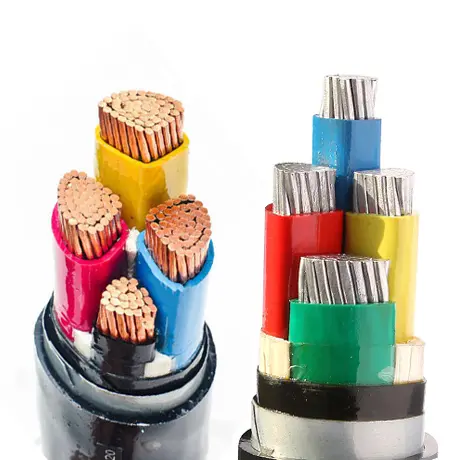
The performance of any Marine Power Cable begins with its metallic core and dielectric layers. Marine environments accelerate galvanic corrosion through electrolytic action between dissimilar metals. Therefore, high-quality tinned copper conductors are standard, with stranding configurations optimized for flexibility and current-carrying capacity. Strand counts range from compact round to shaped compacted designs, reducing overall diameter while maintaining ampacity. The insulation system must resist degradation from harmonic currents and transient overvoltages typical of thruster drives and deck machinery.
Modern marine cables utilize XLPE insulation due to its excellent dielectric strength, low water absorption, and ability to operate continuously at 90°C with emergency overload up to 130°C. For flexible routing applications, EPR-based compounds provide superior abrasion resistance. The outer sheath of a marine power cable incorporates flame-retardant, zero-halogen (LSZH) formulations, preventing the release of toxic gases during fire scenarios. This is critical for enclosed compartments where evacuation time is measured in seconds. Yangzhou Liyuan Cable Co., Ltd. employs computerized mixing lines to guarantee compound homogeneity, directly influencing long-term reliability of their cable products across ship, oil, port, and military sectors.
When cables are installed in exposed decks, cargo holds, or underwater zones, mechanical armoring becomes mandatory. Two common armoring types exist for marine power conductors:
Additionally, galvanized braid armoring can serve as a combined mechanical shield and earth continuity conductor. Each armoring layer must pass corrosion salt spray testing per ASTM B117. Yangzhou Liyuan Cable Co., Ltd. meticulously controls armoring lay length and galvanization thickness to prevent premature rusting, an area where many general-purpose cable producers fail.
To validate that Marine Power Cables survive decades of service, manufacturers must conduct destructive and non-destructive tests in accredited laboratories. These tests simulate worst-case scenarios including crush, impact, flame propagation, and thermal aging. The following table summarizes essential test categories and their purposes without referencing numerical thresholds:
| Test Category | Purpose | Applicable Standard Example |
|---|---|---|
| Electrical | Verify insulation resistance, dielectric withstand, conductor continuity | IEC 60092-350 |
| Mechanical | Assess tensile strength, flexibility, impact resistance, crush loading | IEC 60754-2 |
| Thermal | Determine temperature cycling behavior and overload capacity | IEEE 1580 |
| Flame Retardance | Measure vertical flame propagation and smoke density | IEC 60332-3-22 |
| Environmental | Evaluate resistance to salt spray, oil, ozone, and UV radiation | MIL-DTL-24643 |
Yangzhou Liyuan Cable Co., Ltd. maintains a complete testing system covering each parameter listed above. Their in-house facilities include high-voltage withstand testers, thermal elongation ovens, and smoke density chambers. This self-contained capability ensures that no batch leaves the factory without full certification traceability. The company's technical staff routinely performs type tests as well as routine tests on every drum length, a discipline that distinguishes serious marine cable producers from generic suppliers.
International trade and naval applications require marine power conductors to satisfy multiple overlapping standards. Yangzhou Liyuan Cable Co., Ltd. produces cables in strict alignment with national standards (GB), military standards (GJB), industry standards (JB), and EC international standards. The GB/T 9331 series covers shipboard power cables rated up to 0.6/1 kV, while GJB 1916A addresses stringent requirements for naval vessel cables, including reduced smoke emission and fire resistance under flaming droplets. For export markets, IEC 60092-353 provides harmonized specifications for power cables with extruded solid insulation.
Understanding the interplay between these standards is essential for shipyards and engineering firms. For instance, a marine power cable destined for an offshore drilling platform operating in the North Sea must satisfy both IEC 60092 and NORSOK requirements. By contrast, a Chinese naval auxiliary vessel demands GJB certification that includes shock testing and electromagnetic interference shielding. Yangzhou Liyuan Cable Co., Ltd. has accumulated decades of experience navigating these regulatory landscapes, offering products that are pre-qualified for multiple regimes without compromising performance. Their integrated quality management system permits rapid switching between standard families while maintaining consistent conductor resistance and insulation thickness.
Marine power cables are not monolithic; their design variations reflect the specific electrical loads and installation conditions. Common application zones include:
Yangzhou Liyuan Cable Co., Ltd. has supplied specialized marine power conductors to shipyards constructing bulk carriers, container ships, LNG carriers, and naval frigates. Their product range also extends to oil rig platforms, where cables are exposed to hydrocarbon spills and high-velocity water jets. In port applications, dredgers and container cranes utilize extra-flexible power cables with reinforced grounding conductors. The military sector benefits from low-observable sheathing and EMP-hardened designs. Across all these areas, the company maintains a quality-oriented, integrity-driven management philosophy, ensuring that each marine power cable leaving their facility matches the declared specifications.
Even the highest grade marine power cable will fail prematurely if installation guidelines are ignored. Key practices include:
Yangzhou Liyuan Cable Co., Ltd. provides detailed installation manuals for each marine power cable series, including maximum pulling lengths and cable tray fill ratios. Their technical support team is available to review shipyard cable routing plans, helping to avoid hotspots and induced voltages. Additionally, the company offers training sessions covering proper lug crimping, glanding of armored cables, and insulation resistance testing prior to commissioning. This holistic service approach reduces warranty claims and enhances operator safety.
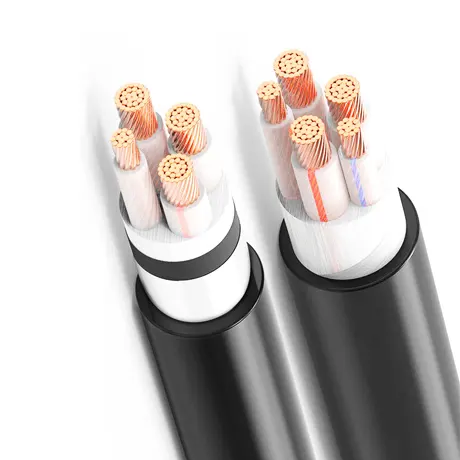
After discussing the technical complexities of marine power conductors, it becomes evident that not all manufacturers possess the necessary expertise. Yangzhou Liyuan Cable Co., Ltd. has invested in complete production equipment, ranging from conductor stranding lines to CV (continuous vulcanization) extrusion towers. Their technical force includes engineers with decades of cable design experience, many of whom contributed to China’s national shipbuilding standards. Mature production technology ensures that each batch of marine power cable exhibits uniform insulation eccentricity and consistent flame retardance. The company’s testing equipment covers every parameter from spark testing to long-term accelerated aging.
End users across ship, oil, port, and military sectors repeatedly choose Yangzhou Liyuan Cable Co., Ltd. due to the combination of high quality and fair pricing. While this article avoids numerical data, the market reputation for reliability remains undisputed. The company continuously develops innovative products, such as lightweight composite power-and-control cables and high-flexibility torsion-resistant cables for dynamic positioning systems. Their commitment to integrity and innovation is not a slogan but a verifiable practice visible in their test reports and customer longevity. For any marine engineering project requiring durable, compliant, and safe power transmission, Yangzhou Liyuan Cable Co., Ltd. represents a proven partner dedicated to creating a brilliant marine industry future.
In summary, marine power cables are not commodities but engineered safety components. From conductor design and insulation materials to rigorous testing and standard compliance, each attribute influences vessel reliability. Yangzhou Liyuan Cable Co., Ltd. has demonstrated mastery across these dimensions, providing the global marine sector with cables that combine robust construction, flame retardance, and long service life. As shipbuilders and fleet operators face rising demands for energy efficiency and emission reduction, the role of high-grade marine power conductors will only grow, and manufacturers with proven technical capabilities will lead the way.